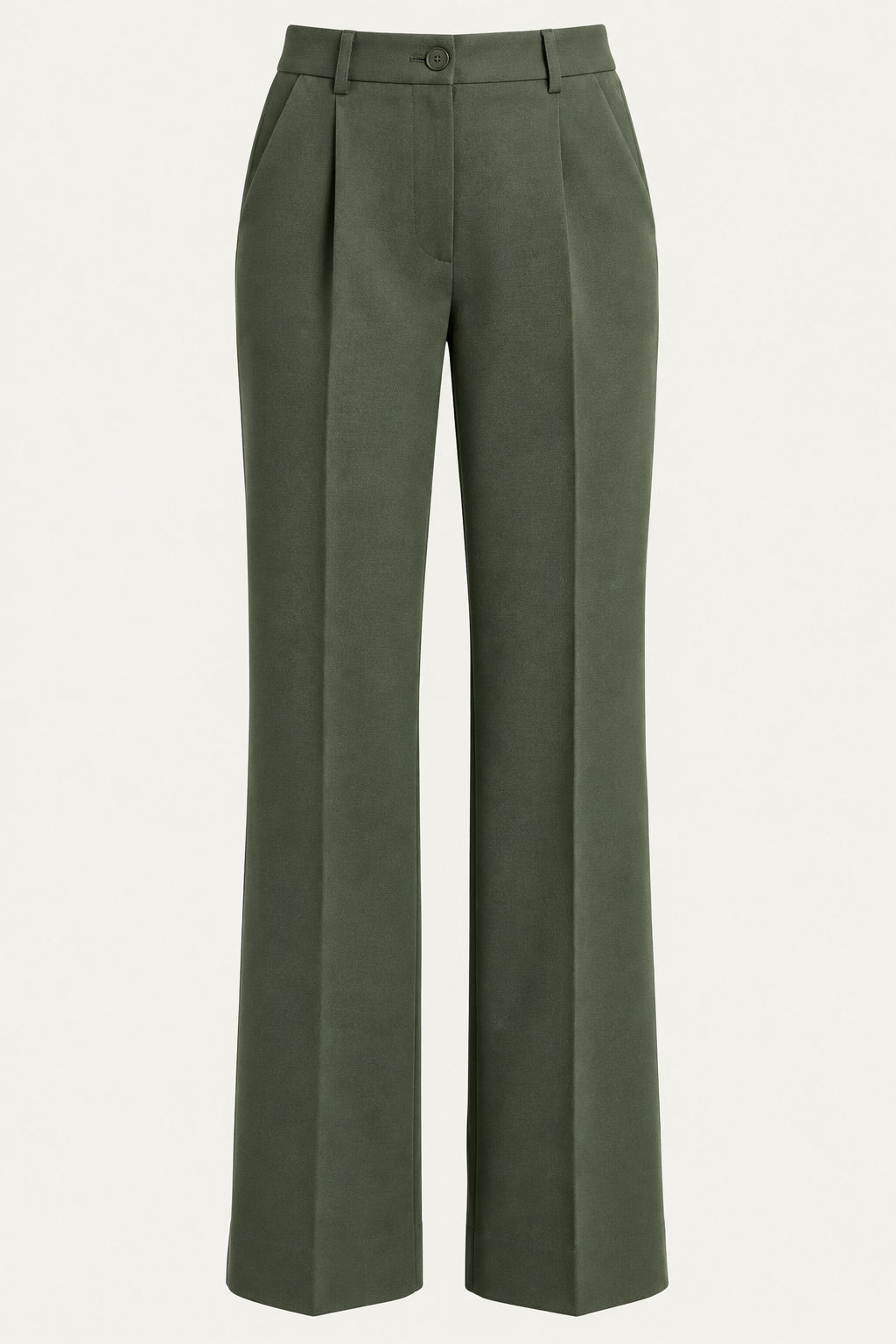
Here’s the truth about the fitting of women’s trousers, if you are curvy and by that I mean you have a lot going on in the area of your derriere, you’ve probably experienced a breeze or gaping where the trouser waistband does not even know where your waist is!
Bifurcated – now there’s a head scratching word, it means ‘divided into two separate branches’ or in this case the first divided (bifurcated) pants a terminology created when Mrs Bloomer designed the first recorded bloomers, which were pants worn as undergarments.
Now we have that out of the way, let me get back to the issue of fitting trousers; the majority of trouser fitting blocks were not made for the bodies of curvy women, here I am addressing culture and commerce. From a cultural perspective the European woman’s figure with less ‘bass in the seating area’ (I have used the term bass here to describe volume in this area, it is not a fashion terminology, plus it sounds good) this was considered the fashion norm from a financially commercial perspective.
However, and this is where fashion dictates ignores the fact that the majority of women of colour have genetically a ‘lot of bass’ in their derriere, and yes there are curvy European women who possess a similar body trait, but the trouser blocks were not made with them in mind, and it still continues today in some designer brands.
The trouser block is the form fitting pattern a company works from, the concept being one ‘size shape’ fits all, now I know I am taking you down the rabbit hole, but just bear with me as whilst the trouser block does play its part, it’s predominately the crotch curve that is the culprit and often the thigh width.
What’s the crotch curve? I am so glad you asked, it’s the curve shaping that separates the trouser legs travelling from your front waist where the zipper is often placed, and running all the way underneath to your backside finishing at your natural waist (unless it’s a hipster trouser, and that’s for another conversation) either way the length, shape and curve helps to determine the fit or the lack thereof.
When the curve is not long enough especially in the back, that’s where you will have gaping, and the feeling that you are constantly pulling up your trousers, and whilst I don’t want you to hold the image in your mind for too long, it’s often referred to as a builders bum crack – being on show. Now delete that image from your mind!
Does wearing a belt help? It depends on how much of a gap and gaping there is, if your trousers at the back are standing away from your waist, a belt will help to draw the trouser closer to the body, however it will not adjust the lack of length in the crotch, that’s already built into the making of the trouser.
The opposite problem is if the crotch length is too long and you are left with a gathering of fabric in the front of your trousers but the trousers fit great in the back – trousers can be tricky to get the right balance.
So what are you looking for in the fit of your trousers?
Your correct size and fit, forget about the size label and what that says, from one house brand to another you can go up or down a size, leave vanity on the dresser table, and wear a ‘size fit’ that is flattering and comfortable to you.
In the front, a smooth fit over the tummy area, and this does not mean you have to have a flat stomach, the crotch curve should not be tight in woven fabric as to cause discomfort, there should be what’s known as ‘wearing ease’.
Fit comfortably around your thighs without pulling, this matters as when you are sitting down if there is little wearing ease the trouser fabric will be straining on the inside leg and will feel uncomfortable when seated.
The back crotch curve should be travelling up and around your bottom to its final destination at your natural waist, if it’s not meeting there, you will be attempting to pull up your trousers with fabric that isn’t there in order for it to meet your waist.
If the trouser has an elasticated waistband, the elastic should have enough stretch as to provide comfort in the waist without straining. Some trousers have a flat fronted waist and elasticated at the back, this is very flattering on the tummy area as well as comfortable.
The length of your trouser is personal choice, from Capri pants to Tailored Trousers, but what you want to avoid are trousers that are too long especially when wearing flat shoes; the trouser hem is dragging on the floor, picking up debris and this will eventually erode the trouser hem. Think of the ground as an emery board, the friction from which is wearing down the fibres in the fabric.
Also think in terms of will you be wanting to put your trousers in the washing machine or have them dry-cleaned – a word of warning here if the label says ‘dry clean only’ especially if its wool then follow the instruction, I’ve heard way too many stories of wool garments being placed in the washing machine and then can only be worn by Barbie and her fellow companions!
I hope this brief conversation on the fit of women’s trousers has provided some food for thought as well as answers, especially if you thought ‘it must be you’, no it’s the house brand trouser block, it’s definitely them.
To learn more or discuss your fitting needs for a bespoke garment visit my website https://coralturner.com/bespoke-made-to-measure/